



Bringing Comfort to Your Care: Care is personal. Protection should be too
Healthcare professionals rely on personal protective equipment (PPE) every day to keep themselves and their patients safe. But protection alone is not enough.
.png)


Healthcare professionals rely on personal protective equipment (PPE) every day to keep themselves and their patients safe. But protection alone is not enough. In environments that demand protection, comfort directly impacts focus, confidence, and quality of care.
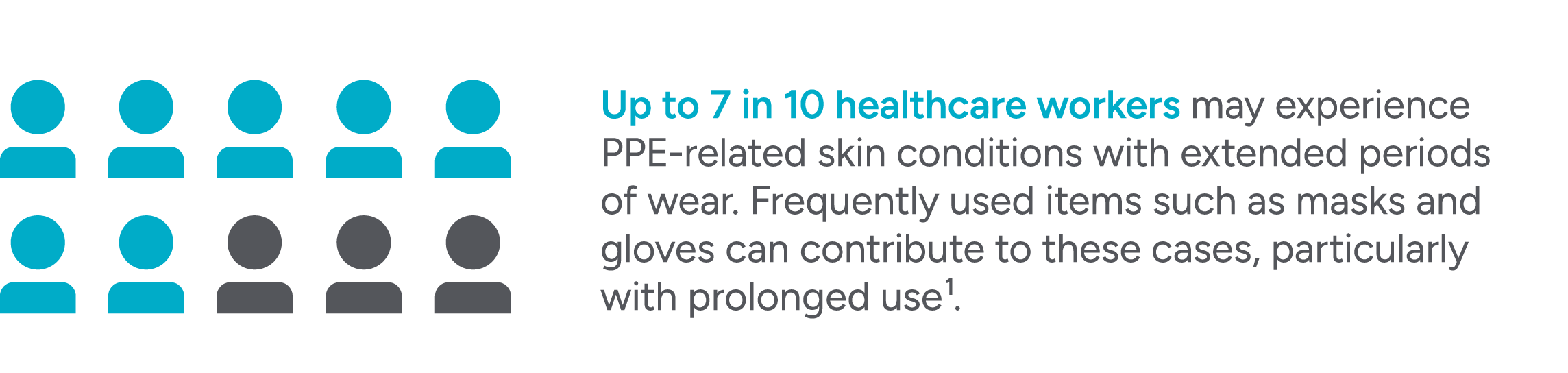
Research suggests that up to 70% of healthcare workers may experience PPE-related skin conditions with extended periods of wear. Frequently used items such as masks and gloves can contribute to these cases, particularly with prolonged use1. This highlights the importance of selecting products designed with both protection and user comfort in mind.
Protection You Can Trust
Extended use of face masks, gloves, and other protective equipment can create challenges for the skin. Constant friction, pressure, moisture buildup, and exposure to certain materials can contribute to irritation, redness, drying, itching, and even occupational dermatitis1, 2, 3.
To prioritize user safety and wellness, there is increasing demand for PPE that delivers:
- Reliable clinical protection
- Reduced risk of skin irritation
- Enhanced comfort during long shifts
- Materials suitable for sensitive skin
But not all products are created equally. PRIMED’s products are thoughtfully designed to deliver the highest levels of protection while maximizing comfort. Backed by extensive testing and high regulatory standards, PRIMED products undergo rigorous testing to ensure a low potential for irritation while supporting skin-contact safety.
Biocompatibility Testing
Medical devices, such as face masks and nitrile exam gloves, must undergo biological safety evaluations to ensure they are safe for their intended use4, 5. Biocompatibility refers to the ability of a material to perform its intended function without causing harmful biological reactions in the body4, 5.
What Testing is Typically Required?
Under the internationally recognized ISO 10993 framework, skin-contact medical devices commonly undergo evaluations which include:
- Cytotoxicity Testing: Determines whether materials release substances that could damage living cells. This is often considered a foundational biological safety test4, 5.
- Skin Irritation Testing: Evaluates whether the material causes redness, inflammation, or irritation after direct skin contact4, 5.
- Sensitization Testing: Assesses whether repeated exposure could result in allergic contact dermatitis or sensitization over time4, 5.
Why Does Biocompatibility Matter?
Biocompatibility testing is especially valuable for clinicians who may wear PPE continuously throughout long shifts, where cumulative exposure can impact skin health1, 3. For healthcare workers, biocompatibility testing provides several important benefits and increases confidence and compliance.
PRIMED products undergo rigorous testing to ensure a low potential for irritation while supporting skin-contact safety.
Comfort You Can Feel
At PRIMED, we strive to bring comfort to your care though high-quality products that support clinicians, patients, and environments where trust matters most. From material selection to final construction, quality is engineered into every detail.
For example, PRIMED’s hypoallergenic face masks incorporate a soft, silky inner layer and materials chosen specifically to enhance comfort for users with sensitive skin. Similarly, PRIMED offers accelerator free nitrile exam gloves, which eliminate certain chemicals associated with Type IV allergies, such as dermatitis2 in sensitive individuals.
Hypoallergenic Face Masks
%20....png)
What Does HRIPT Testing Mean for Sensitive Skin Users?
Extended mask wear can irritate sensitive skin and increase the risk of skin reactions1, 2. An important evaluation for skin-contact products, such as face masks, is the Human Repeat Insult Patch Test (HRIPT)6, 7.
Think of HRIPT as a carefully controlled “real-world skin compatibility test”6, 7. During the study, small amounts of a product or material are repeatedly applied to the skin over several weeks6, 7. After a period of rest, the material is reapplied to determine whether repeated exposure causes irritation or triggers an allergic skin response. The goal? To answer this critical question – is this material likely to cause irritation or sensitization when it comes into repeated contact with skin?6, 7, 8
When a face mask or other skin-contact product has successfully undergone HRIPT testing, it provides additional evidence that the materials have been evaluated for their potential to cause:
- Skin irritation
- Allergic reactions
- Sensitization from repeated wear4, 5, 6
For individuals with sensitive skin, HRIPT-tested products may provide greater confidence that the materials have been assessed for long-term skin compatibility4, 5, 6. While individual responses can vary, HRIPT testing demonstrates an added level of diligence in evaluating comfort and safety.
The goal? To answer this critical question - is this material likely to cause irritation or sensitization when it comes into repeated contact with human skin?
Accelerator Free Nitrile Exam Gloves
.png)
What Does the Low Derma™ Formula Mean for Sensitive Skin Users?
Glove-related dermatitis remains a common occupational skin condition among healthcare workers1, 3. Traditional nitrile gloves typically contain chemical accelerators used during manufacturing, to help cure gloves faster. Although effective in production, a small fraction of users can develop sensitivity to these chemicals over time2.
An accelerator free nitrile exam glove is manufactured without these chemical accelerators, helping reduce the risk of Type IV allergies such as dermatitis, while maintaining the protective benefits user expect from nitrile exam gloves2. The Low DermaTM formulation provides a solution for clinicians who regularly experience glove-related irritation or allergy concerns, adding to a broader skin-health strategy.
When Protection and Comfort Come Together
Historically, PPE selection focused primarily on protective capabilities, like filtration and barrier protection, and regulatory compliance. While those performance attributes remain essential, today’s healthcare environments increasingly recognize the importance of user comfort1, 2, 3.
When it comes to supporting both safety and wearer wellbeing, PRIMED’s hypoallergenic masks and accelerator free nitrile gloves combine the best of both worlds, offering:
- Regulatory compliance
- Strong barrier protection
- Biocompatibility testing
- Sensitive-skin friendly materials
By offering PPE that achieves protection and comfort, healthcare professionals can focus on what matters most: delivering exceptional patient care.
References
1Ho, W. Y. B., Tan, L. Y. C., Zhao, X., Wang, D., & Lim, H. L. J. (2022). Epidemiology of occupational dermatoses associated with personal protective equipment use in the COVID-19 pandemic: Risk factors and mitigation strategies for frontline health care workers. JAAD International, 8, 34–44.
2Yu J, Chen JK, Mowad CM, et al. Occupational dermatitis to facial personal protective equipment in health care workers: A systematic review. Journal of the American Academy of Dermatology. 2021;84(2):486–494.
3Keng BMH, Gan WH, Tam YC, Oh CC. Personal protective equipment-related occupational dermatoses during COVID-19 among health care workers: A worldwide systematic review. JAAD International. 2021;5:85–95.
4International Organization for Standardization. ISO 10993-1: Biological Evaluation of Medical Devices—Requirements and General Principles for the Evaluation of Biological Safety Within a Risk Management Process.
5U.S. Food and Drug Administration. Use of International Standard ISO 10993-1, Biological Evaluation of Medical Devices. FDA Guidance. 2023.
6McNamee PM, Api AM, Basketter DA, et al. A review of critical factors in the conduct and interpretation of the Human Repeat Insult Patch Test (HRIPT). Regulatory Toxicology and Pharmacology. 2008;52(1):24–34.
7Basketter DA. The Human Repeated Insult Patch Test in the 21st Century: A Commentary. Cutaneous and Ocular Toxicology. 2009;28(2):49–53.
8Na M, Ritacco G, O'Brien D, Lavelle M, Api AM, Basketter D. Fragrance Skin Sensitization Evaluation and Human Testing: 30-Year Experience. Dermatitis. 2021;32(5):339–352.
%201080%20x%20540%20(1).jpg)
PRIMED Joins the Fight Against Bullying
February 25, 2026 is Pink Shirt Day. PRIMED proudly unites with hospitals across Canada to bring awareness to the movement that promotes kindness, inclusion, and respect.
%20-%20Sterlization%20Wrap%20Display.jpg)

Contact our team to ask any questions you might have, they would love to assist you!

Contact our sales team, they would love to assist you in ordering the products you want!
