


PRIMED Nitrile Examination Gloves are single-use medical gloves designed to provide a barrier against cross-contamination between patients and caregivers during medical procedures. They also offer a level of protection against chemotherapy drugs and harmful chemicals, depending on the glove. Proper glove selection, use, and disposal help support safe practices in healthcare settings.
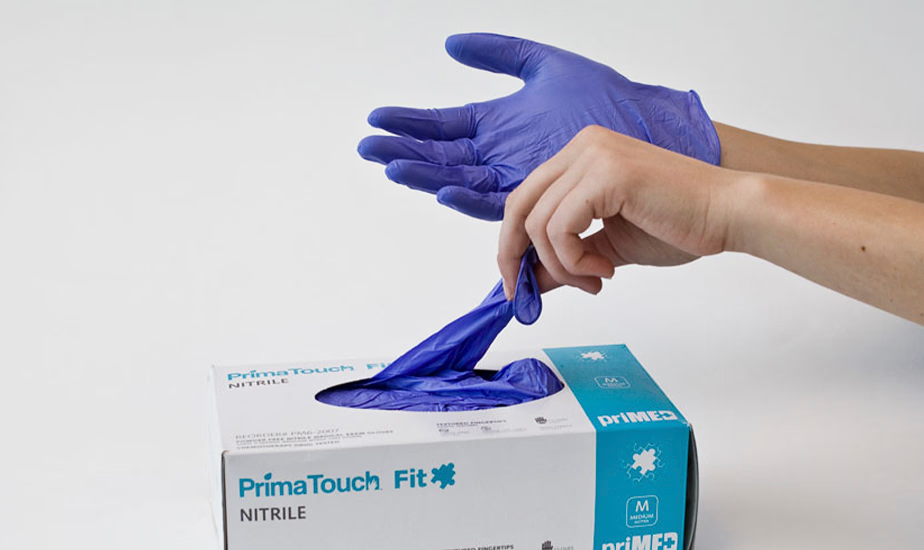
Wearing your Nitrile Glove correctly
Follow each step in order. Switch tabs to see how to put the glove on and how to safely remove it.
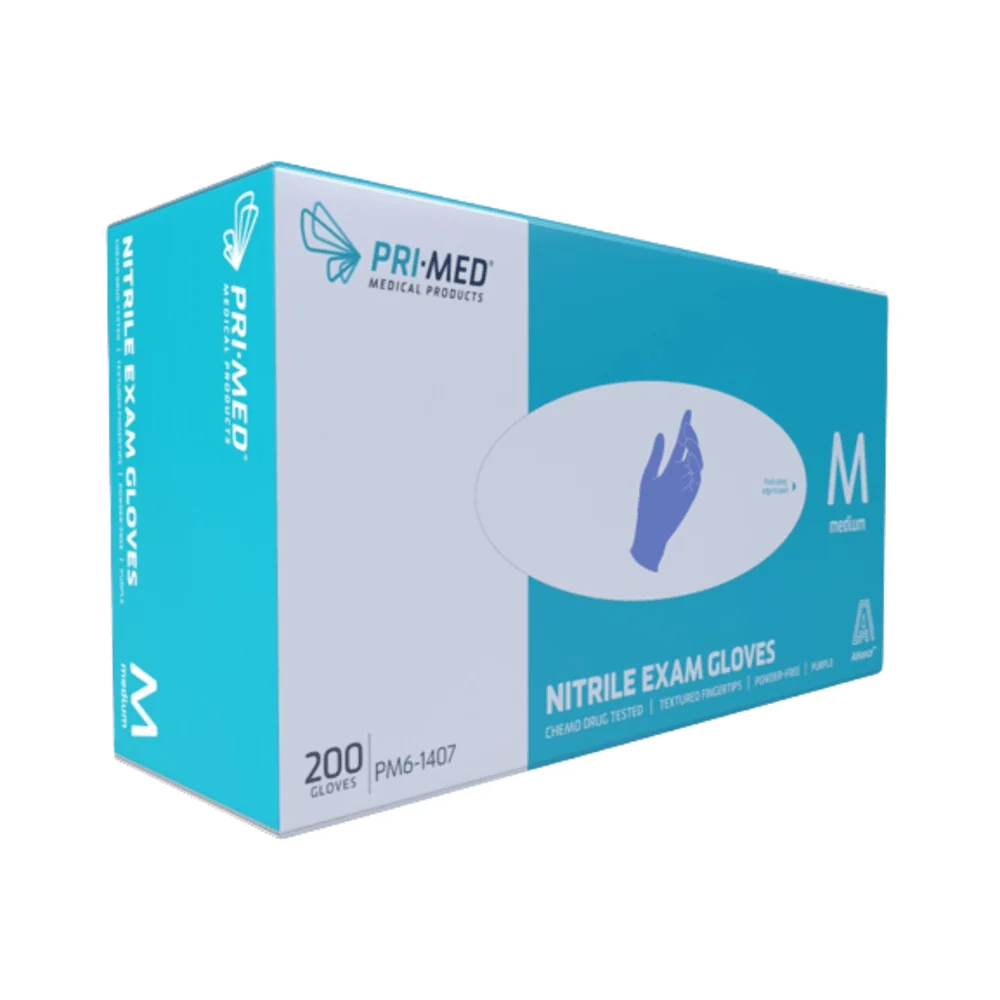

Using your thumb, push down the "PUSH TO OPEN" on the packaging perforation.


Once the first exam glove is properly removed from the packaging, be careful to only touch the restricted surface of the glove corresponding to the wrist (at the top edge of the cuff).
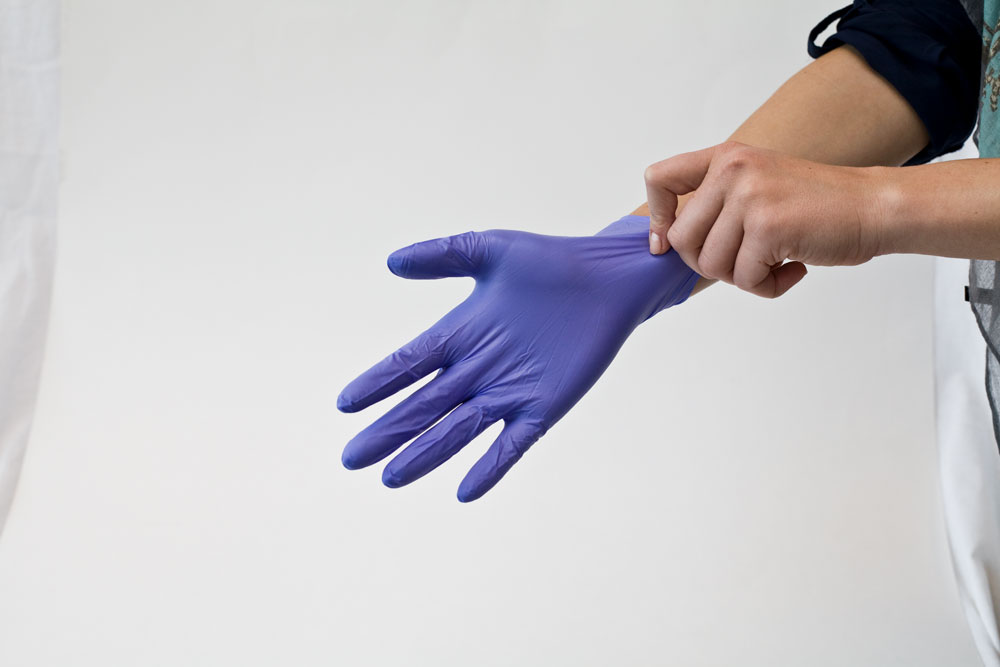

Don the first exam glove from this touch point. To ensure a good fit, pull glove near the bottom of the palm while donning. Avoid pulling at the “bead” at the end of the cuff to reduce the risk of rips and tears.


Take the second glove with the bare hand, and touch only restricted surfaces of glove corresponding to the wrist. To avoid touching the skin of the forearm with the gloved hand, turn the external surface of the glove to be donned on the folded fingers of the gloved hand, thus permitting to glove the second hand.
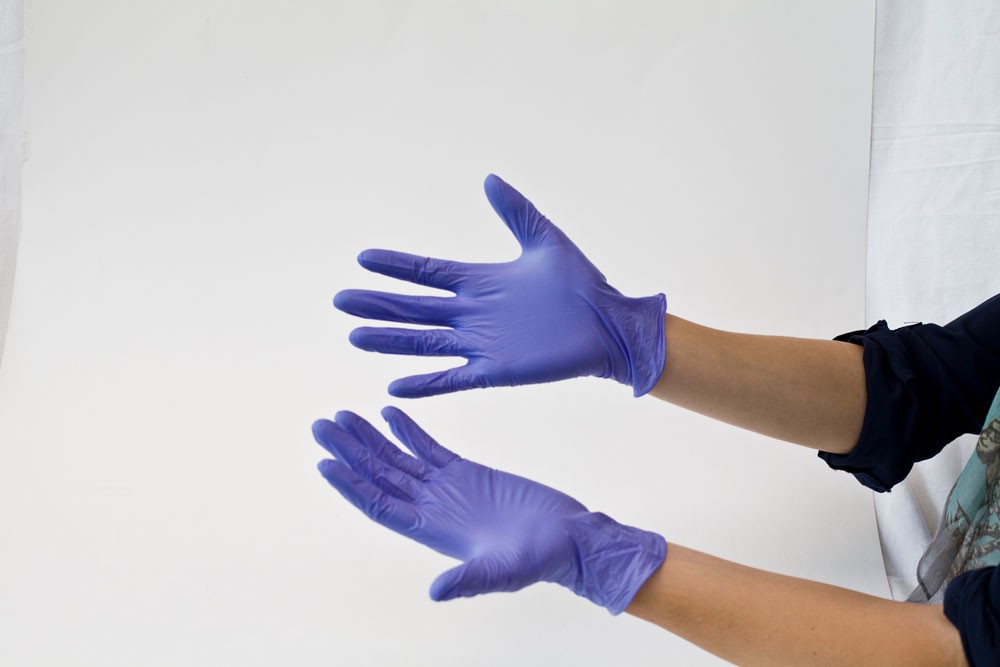

To avoid touching the skin of the forearm with the gloved hand, turn the external surface of the glove to be donned on the folded fingers of the gloved hand, thus permitting to glove the second hand.

To remove the gloves, start by pinching one at the wrist level, without touching the skin of the forearm with the contaminated glove. Then peel the glove away from the hand, allowing the glove to be flipped inside out once removed.

Holding the removed glove in the gloved hand, slide the fingers of the ungloved hand between the glove and the wrist. Remove the second glove by rolling it down the hand and over the first glove.
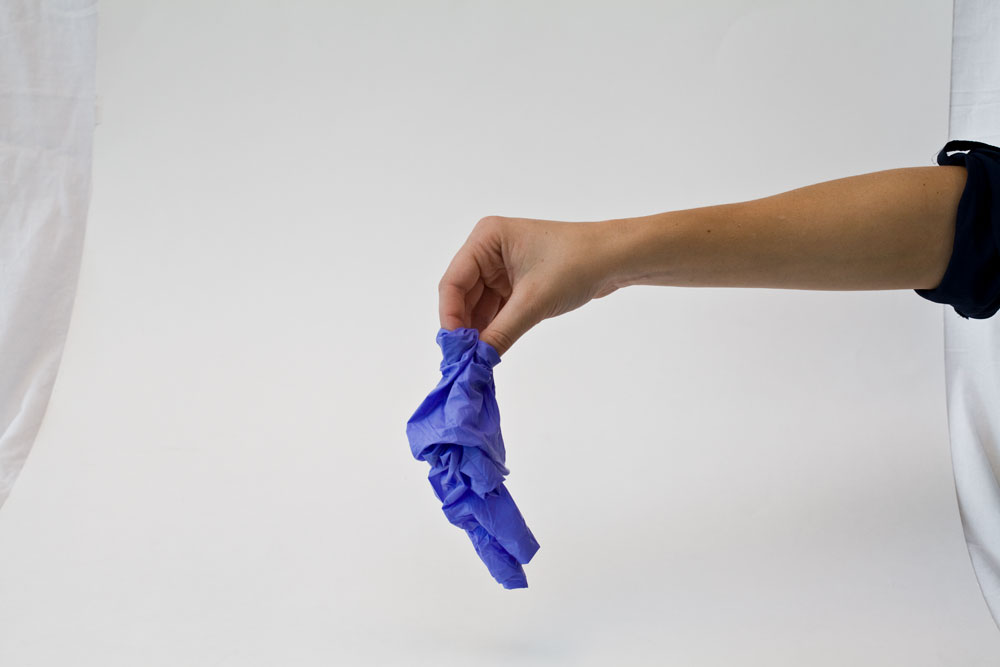
Discard of the removed gloves according to your facilities procedures and best practices.
Product information
General Uses
The primary purpose of medical Nitrile examination gloves (“ Nitrile exam gloves”) is to provide a barrier of protection from cross-contamination between patients and caregivers during medical procedures. Exam gloves also provide a level of protection from chemotherapy drugs and harmful chemicals*. The level of protection against these drugs and chemicals is glove-dependent. Glove test results are available upon request.
Best Practices
Exam gloves are single-use products and should only be used for a single procedure and patient. It is important to regularly check and inspect your gloves to ensure their integrity is maintained, especially when dealing with medical tools or harmful substances. When safe to do so, dispose of and replace exam gloves if they become soiled, after extended use, or if they are torn or dislodged. Glove changes should also be considered if activities present a possibility of cross-contamination.
Frequently asked questions
Most Nitrile medical exam gloves available to healthcare practitioners contain accelerators. Accelerators help in the "curing" of gloves during the production process. While the majority of users do not experience any negative impact from these accelerators, some individuals may develop sensitivities to this class of chemicals.
This sensitivity tends to result in a type IV allergic reaction and can potentially dermatitis.
Clinicians who have such sensitivities should choose PRIMED’s Pure™ Nitrile Exam Gloves. PRIMED Pure™ nitrile gloves are manufactured without the chemical accelerators found in most nitrile gloves allowing healthcare workers to feel comfortable and protected.
Choosing the proper size is paramount when ensuring a good fit for your medical examination gloves. There are two keys to ensuring a proper fit with medical exam gloves;
- Picking the correct size; and
- Donning the glove properly.
Unfortunately picking the size of gloves is somewhat of a trial and error process. The feel and fit of gloves change slightly depending on specific glove lines and the thickness of the material. As such, when trying on an exam glove ask yourself the following questions.
Is the glove too tight?
Does your examination glove fatigue your hand? Do you feel resistance when you move your fingers? If so, consider a larger glove. In addition to being more comfortable, a larger glove will experience less stress on the material, which may reduce the risk of tears.
Is the glove too loose?
Does the glove feel loose? Is it tough to grip objects? Is there an excess of glove material or is the material clumping? If so, consider a smaller glove, as excess material may increase the risk of tears or punctures due to its nagging on other objects.
Does the glove fit correctly?
Is the glove comfortable to wear for extended periods? Does it feel like a second skin or like it is not even there? If so, you have found the right glove. PRIMED Exam Gloves are available in five sizes from extra small through to extra large to ensure the best possible fit for most hand sizes and shapes.
Donning your glove properly will help to ensure your gloves are fitting properly. Please check the information for use page for recommendation on properly donning examination gloves.
The primary purpose of medical examination gloves is to help prevent cross-contamination between patients and caregivers during medical procedures. Medical examination gloves can also be used to provide a certain level of protection from chemotherapy drug agents and chemicals* depending on the glove line.
* Chemical resistance testing results are available upon request. Please consult your PRIMED representative for results before use.
PRIMED’s medical examination gloves are “single-use” (disposable) products and should be changed or disposed of at the completion of the current task. In addition, healthcare practitioners should change exam gloves:
- When consulting or treating a new or different patient;
- When moving between a contaminated part of the body to another part of the body or work environment that may be at higher risk from cross-contamination (e.g. broken skin, mucous membranes etc.)
- If any holes, rips, tears or punctures are observed;
- If your gloves are grossly contaminated.